Developmental and Behavioural Psychology
People of different ages react to illness and medications in very different ways. A toddler fearfully screams at a syringe, a teenager feels self-conscious about taking asthma inhalers in school, while an elderly patient worries about losing independence. In this unit, we explore human developmental stages, personality types, illness perceptions, anxiety, depression, somatization, and coping strategies.
In this topic, you will learn:
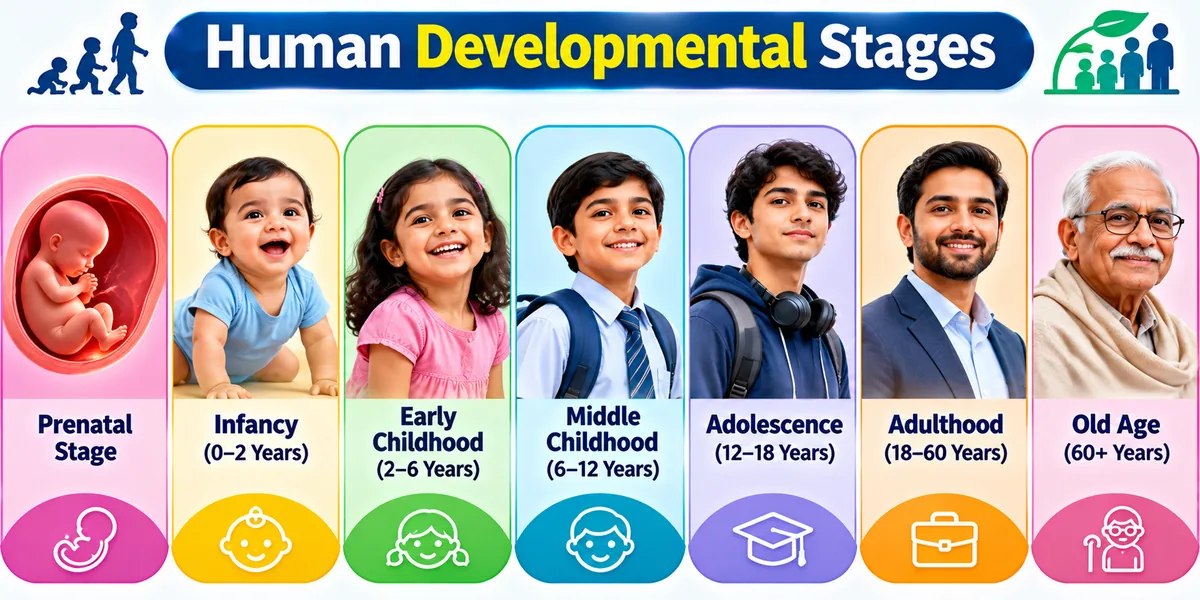
1. Human Developmental Stages and Healthcare Needs Across the Lifespan
Simple Definition:
Developmental Psychology in Healthcare is defined as the study of how human biological growth, cognitive abilities, and psychological needs evolve from infancy through old age, and how these changes influence patient care.
Erikson's Developmental Stages Applied to Healthcare:
| Life Stage | Core Psychological Crisis | Healthcare Needs & Fears | Pharmacist Counseling Approach |
|---|---|---|---|
| Infancy & Toddlerhood (0–3 yrs) | Trust vs. Mistrust | Stranger anxiety, fear of separation from mother, needle phobia. | Counsel parents on oral syringe dosing; advise giving flavored syrups in parents' arms. |
| Childhood (4–11 yrs) | Industry vs. Inferiority | Views illness as a punishment for bad behavior; fears body mutilation. | Reassure child that medicine is to help, not punish; use colorful dosing charts. |
| Adolescence (12–18 yrs) | Identity vs. Role Confusion | Peer pressure, denial of chronic illness, fear of looking "different". | Provide confidential counseling; support self-management (e.g. discreet insulin pens). |
| Adulthood (19–64 yrs) | Intimacy & Generativity | Financial strain of treatment, job loss worry, family breadwinner stress. | Recommend cost-effective generic drugs; simplify dosing around work hours. |
| Geriatric (65+ yrs) | Integrity vs. Despair | Polypharmacy (5–10 pills/day), memory loss, fear of burdening family. | Use large print labels, pill organizers (dosette boxes), and inspect for drug interactions. |
2. Personality Theories and Patient Interaction Styles

Simple Definition:
Personality is defined as the enduring pattern of thoughts, emotional reactions, and behaviors that distinguish one individual from another across different life situations.
The "Big Five" (OCEAN) Personality Traits & Patient Health Behavior:
Curious, imaginative, willing to try novel therapies. They readily adopt modern health apps, digital glucose monitors, and lifestyle adjustments.
Disciplined, organized, responsible. Patients with high conscientiousness take their tablets exactly at prescribed times and never miss hospital appointments.
Outgoing, social, talkative. They love communicating with pharmacists, asking questions, and seeking peer support groups for chronic diseases.
Cooperative, trusting, polite. They follow doctors' instructions easily but might feel shy to speak up if they experience uncomfortable drug side effects.
Prone to worry, panic, anxiety, and catastrophic thinking. Patients with high neuroticism overreact to mild harmless side effects (e.g. harmless dry mouth) and stop taking life-saving cardiovascular drugs in fear. They require patient, calm reassurance.
Type A vs. Type B Personality in Cardiovascular Risk:
• Type A Personality: Highly competitive, ambitious, impatient, aggressive, and time-urgent. Research shows Type A individuals experience chronic stress and high cortisol/adrenaline levels, leading to a significantly higher incidence of coronary artery disease and hypertension.
• Type B Personality: Relaxed, patient, easygoing, and less prone to stress-induced heart conditions.
3. Psychological Factors Affecting Illness Perception and Recovery
Simple Definition:
Illness Perception is defined as the cognitive and emotional beliefs a patient holds about their illness—including what caused it, how long it will last, how dangerous it is, and whether it can be cured.
The 5 Core Dimensions of Illness Perception (Leventhal's Model):
4. Common Psychological Disorders in Healthcare: Anxiety, Depression & Somatization
A. Anxiety Disorders
• Anxiety is defined as a state of excessive apprehension, nervous dread, and physiological arousal in the absence of an immediate real threat.
• It is also known as: Pathological apprehension or hyperarousal state.
• It is used for: Identifying patients with tachycardia, panic, and trembling during clinical procedures.
• For example: Severe dental chair phobia or panic before an intravenous cannulation.
• Physical signs: Tachycardia, tremors, sweating, dry mouth, rapid breathing.
• Hospital presentation: Pre-operative panic, fear of MRI tunnels, panic attacks misdiagnosed as heart attacks.
B. Depressive Disorders
• Depression is defined as a persistent mood disorder characterized by pervasive sadness, loss of pleasure (anhedonia), and energy depletion lasting >2 weeks.
• It is also known as: Clinical depression or Major Depressive Disorder (MDD).
• It is used for: Explaining chronic disease non-compliance where patients feel hopeless about recovery.
• For example: A diabetic patient neglecting insulin therapy due to overwhelming fatalism and worthlessness.
Clinical Characteristics: Marked by persistent sadness, loss of pleasure (anhedonia), fatigue, feelings of worthlessness, and sleep disturbances.
• Co-morbidity: Occurs in over 30% of post-stroke and cancer patients.
• Impact: Depressed patients feel hopeless and abandon their medication regimen.
C. Somatization Disorder
• Somatization is defined as the subconscious manifestation of emotional distress as recurring physical bodily symptoms with no underlying organic pathology.
• It is also known as: Somatic symptom disorder or psychosomatic manifestation.
• It is used for: Explaining medically unexplained chronic fatigue, tension headaches, and gastrointestinal cramps.
• For example: Recurring chronic abdominal pain during exam stress in adolescents with normal endoscopy findings.
Clinical Characteristics: Characterized by the expression of psychological distress and emotional conflict as physical bodily symptoms without any detectable organic medical pathology.
• Symptoms: Chronic unexplained headaches, abdominal cramps, chest pain.
• Danger: Patients demand multiple CT scans and end up abusing OTC analgesics.
Visual Diagram: The Vicious Cycle of Somatization & Health Anxiety
5. Coping Strategies, Resilience, and Stress Management Techniques
Simple Definition:
Coping is defined as the cognitive and behavioral efforts an individual uses to manage, reduce, or tolerate internal and external demands that exceed their personal resources.
1. Problem-Focused Coping (Direct Action)
Taking constructive actions directly to solve the problem causing stress:
- Learning how to self-inject insulin properly from a pharmacist.
- Buying a digital pillbox with alarm reminders.
- Switching to healthy high-fiber diet to control blood sugar.
2. Emotion-Focused Coping (Managing Feelings)
Regulating the emotional distress caused by unavoidable sickness:
- Practicing deep diaphragmatic breathing before a painful injection.
- Seeking emotional comfort from family and prayer.
- Accepting an amputated limb through psychological counseling.
Psychological Resilience & Stress Management Techniques:
Resilience is defined as the ability to bounce back, adapt, and recover positively in the face of severe illness, trauma, or disability.
Focusing non-judgmentally on the present moment; reduces autonomic sympathetic surge.
Systematically tensing and relaxing muscle groups from toes to neck to relieve physical stress.
Replacing irrational catastrophic thoughts ("My life is over") with realistic coping beliefs ("This disease is manageable with daily medicine").